
High pain
Complex procedures, modifiers, bundling rules, and note requirements create repeated friction.
MedCode Pro starts with a focused pain point in orthopedics and spine: undercoding, missed modifiers, weak documentation support, and delayed billing cleanup. The long-term opportunity is a workflow layer that connects clinical work, coding decisions, and reimbursement quality.

Orthopedics and spine are strong entry points because coding variation matters financially, physicians care about the issue, and workflow pain is easy to articulate to both users and buyers.
Complex procedures, modifiers, bundling rules, and note requirements create repeated friction.
Even a small number of missed codes or modifiers can translate into visible reimbursement loss.
Unlike downstream audit software, MedCode Pro aims to influence decisions earlier in the workflow.
The current workflow is reactive. Surgeons operate first, billing teams reconstruct later, and rework follows. That makes this a strong timing window for decision-support software that is narrow enough to gain trust and practical enough to show ROI.
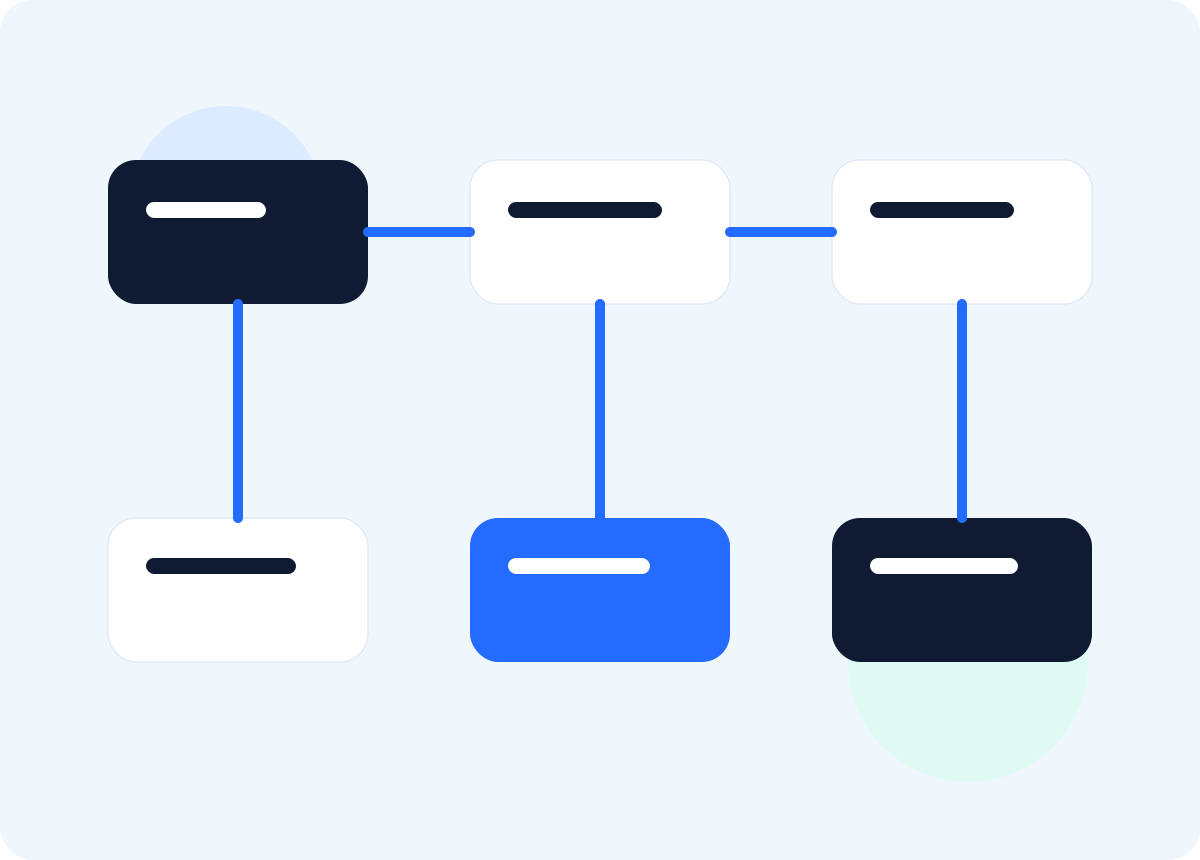
MedCode Pro is credible because the first use case is tight. The upside comes from what data and workflow position that wedge unlocks over time.
Case-level CPT, modifier, and documentation support for ortho and spine.
Practice-level analytics and feedback loops around missed revenue and note quality.
EHR-connected workflow support and tighter billing integration.
A broader coding intelligence layer across more specialties and care settings.
There is a real, recurring, painful workflow issue with obvious financial consequences, especially in procedural specialties with coding complexity.
The product sits near a rich intersection of clinical action, billing logic, and reimbursement outcomes, which creates room for platform expansion.
Incumbent workflows are fragmented and reactive. Most tools live downstream. The initial advantage comes from being narrow, physician-relevant, and workflow-native.
Because the pain is personal: missed revenue, uncertainty, note ambiguity, and fear of getting coding wrong in complex cases.